


BENEFITS OF HEATED BATHROOM FLOORS
Heated bathroom floors feel great and they offer a variety of benefits that make your bathroom more comfortable, efficient, and enjoyable to use every day:
Warmth and Comfort
Say goodbye to cold tile on winter mornings. Radiant heat gently warms the floor and the room.
Energy Efficiency
Electric radiant heat uses less energy than you might expect, especially in small rooms like bathrooms. It delivers heat exactly where it’s needed.
Even Heat Distribution
No more cold spots or drafts. Heat rises evenly from the floor, warming the entire space without noisy vents or fans.
Low Maintenance
Once installed, radiant heating systems require little to no maintenance and have no moving parts that wear out.
Healthier Air Quality
Unlike forced-air systems, radiant heat doesn’t blow dust, allergens, or moisture around. It maintains clean, breathable air for your bathroom.
Increased Home Value
Heated floors are a high-end feature that adds appeal for potential buyers.
TYPES OF RADIANT FLOOR HEATING FOR BATHROOMS
When choosing radiant heat for your bathroom, you’ll typically pick between two system types:
Heating Cables
Heating cables offer maximum layout flexibility, making them best for bathrooms with irregular shaped bathrooms or obstacles like vanities or toilets. They can be used with uncoupling and waterproofing membranes for added protection under tile.

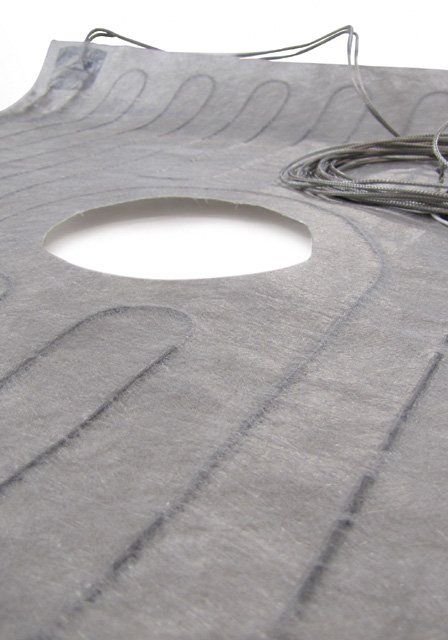
Heating Mats
Heating mat systems have pre-spaced cables embedded in mesh sheets. This allows for quicker installation in square or rectangular rooms with fewer obstructions. These can also be paired with membranes for waterproofing.
FLOORING OPTIONS FOR HEATED BATHROOM FLOORS
When it comes to heated bathroom floors, choosing the right flooring material is important. Not only do you want something that can handle the heat, but it should also be durable, resistant to moisture, and aesthetically pleasing. Here are some popular flooring options we recommend for heated bathroom floors:
Ceramic Tiles
Ceramic tiles are a popular choice for heated bathroom floors due to their durability and heat-conducting properties. They are available in various colors, patterns, and designs, allowing you to create a unique look for your bathroom.
Stone
Natural stone, such as marble or granite, is another excellent option for heated bathroom floors. Not only do they provide a luxurious and timeless appeal, but they also retain heat well.
Resilient Materials
Vinyl and linoleum are resilient flooring options that work well with heated bathroom floors. They are available in a wide range of styles and colors, and they are comfortable underfoot.
HEAT YOUR BATHROOM FLOOR AND MORE
Most homeowners don’t know that radiant heating doesn’t have to stop at your bathroom floor. You can safely extend electric radiant heat into your shower floor as well with Schluter shower kits. These systems are perfect for remodels or new builds using Schluter or KERDI products. The KERDI line also offers waterproofing products to keep your radiant shower heating safe.

HEAT YOUR BATHROOM WITH WARM YOUR FLOOR TODAY
Contact us today using the form below and start browsing our bathroom floor heating—we're ready to help you warm your bathroom.
BATHROOM FLOOR HEAT FAQs
Can I install heated floors in my bathroom myself, or do I need a professional?
Yes, many electric radiant heating systems are DIY-friendly, especially mat-style systems. However, electrical connections to the thermostat should be done by an electrician to ensure safety and code compliance.
How long does it take for the bathroom floor to heat up?
Most electric radiant floor systems take about 20 to 60 minutes to warm up, depending on the flooring material and room conditions. Using a programmable thermostat lets you schedule heat so your floor is warm when you need it.
What type of thermostat should I use with my heated bathroom floor?
You can choose between a basic manual thermostat or a programmable model, including smart thermostats that connect to Wi-Fi. Programmable and smart thermostats offer better energy control and are best for daily routines.
Will radiant floor heating increase my energy bills?
Radiant floor heating is very efficient, especially in small spaces like bathrooms. Most systems cost just a few dollars per hour to run, and using a smart thermostat can help minimize energy use even further.
Can I heat just part of my bathroom floor, like in front of the vanity or shower?
Absolutely. Many homeowners choose to heat only high-traffic or cold areas, like near the vanity, toilet, or shower entry. Customizable cable systems make it easy to target just the areas you want.
How do I know what size heating system I need for my bathroom?
Measure only the areas you want to heat—typically the open, walkable floor space (not under vanities or tubs). Our team can help you calculate the correct system size and layout for your specific floor plan.
Shop By Category
EXPLORE OUR TOP TIPS & GUIDES
Our Guide to Radiant Floor Heat
Get insights on our top asked floor heating questions from our industry experts.
Electrical Requirements: 120V vs 240V
Having a basic understanding of voltage is important when choosing floor heating products.
Mat vs Cable Floor Heat Systems
Explore the similarities and differences between mat systems and cable systems.
How to Determine Heated Area
Learn how to figure out what size mat or cable you need for your project.
Replacing Floor Heat Thermostats
Learn how to know when it’s time to replace your floor heat thermostat.
How to Install Floor Heat Under Existing Floors
It’s possible to install floor heat without ripping up your floors. Find out how.
STAY WARM & INFORMED
Stay one step ahead with expert articles, heating hacks, and product news specially curated for contractors, delivered right to your inbox when you sign up for our newsletter.